1. Why Plastic Terrarium Domes Fail Over Time
Most desktop terrariums utilize polymethyl methacrylate (PMMA / Acrylic) due to cheaper injection-molding production costs. However, acrylic possesses three fundamental material flaws when paired with living biospheres:
- Hydrophobic Static Charge: Acrylic surfaces naturally build up static charges that attract microscopic airborne dust and pollen, dirtying the view within weeks.
- Micro-Scratching from Cleaning: Even microfiber cloths scratch soft acrylic polymers, progressively clouding optical transparency.
- Chemical Outgassing: Under continuous 4300K photonic LED exposure, lower-grade plastics outgas trace phthalates that inhibit sensitive bryophyte moss growth.
2. The Superiority of 3.3 Lab-Grade Borosilicate Glass
MossPod uses 2.5mm thick mouth-blown borosilicate glass with a 3.3 × 10⁻⁶ K-1 thermal expansion coefficient. Originally developed for scientific chemical distillers, this glass offers unrivaled structural properties:
| Physical Property | MossPod Borosilicate (3.3) | Standard Commercial Acrylic |
|---|---|---|
| Optical Transmission | 92.4% (Flat PAR Spectrum) | 86.1% (Degrades to 74%) |
| Surface Hardness (Mohs) | 6.5 (Scratch Proof to Steel) | 3.0 (Easily Scratched) |
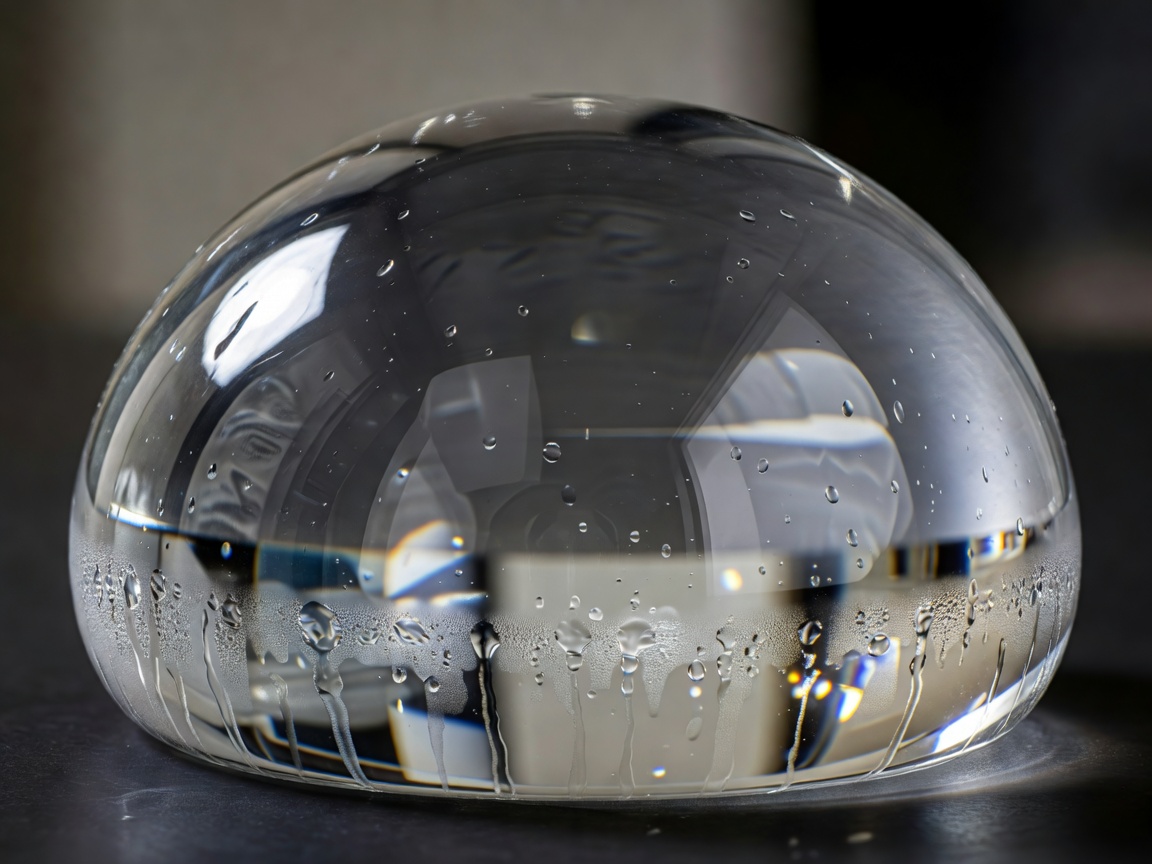
| Hydrophilic Condensation Angle | 14° (Micro-Sheeting Flow) | 68° (Obstructive Heavy Drops) |
| Acoustic Transmission Loss | -12 dB at 4000Hz (Fan Whine) | -3 dB (Resonates Vibrations) |
3. Fluted Channeling: The Art of Invisible Moisture
Rather than smooth glass which leaves irregular, blurry fog spots across your line of sight, the MossPod dome features internal micro-fluting. These vertical 0.8mm channels employ capillary adhesion to force coalescing moisture drops into narrow downward gutters, leaving the front viewing window completely unobstructed.
The 4300K Biosphere LED Engine
Learn how the dome's high optical transmission works in tandem with the 18-diode canopy to deliver balanced, eye-safe illumination.
Read Lighting Article →