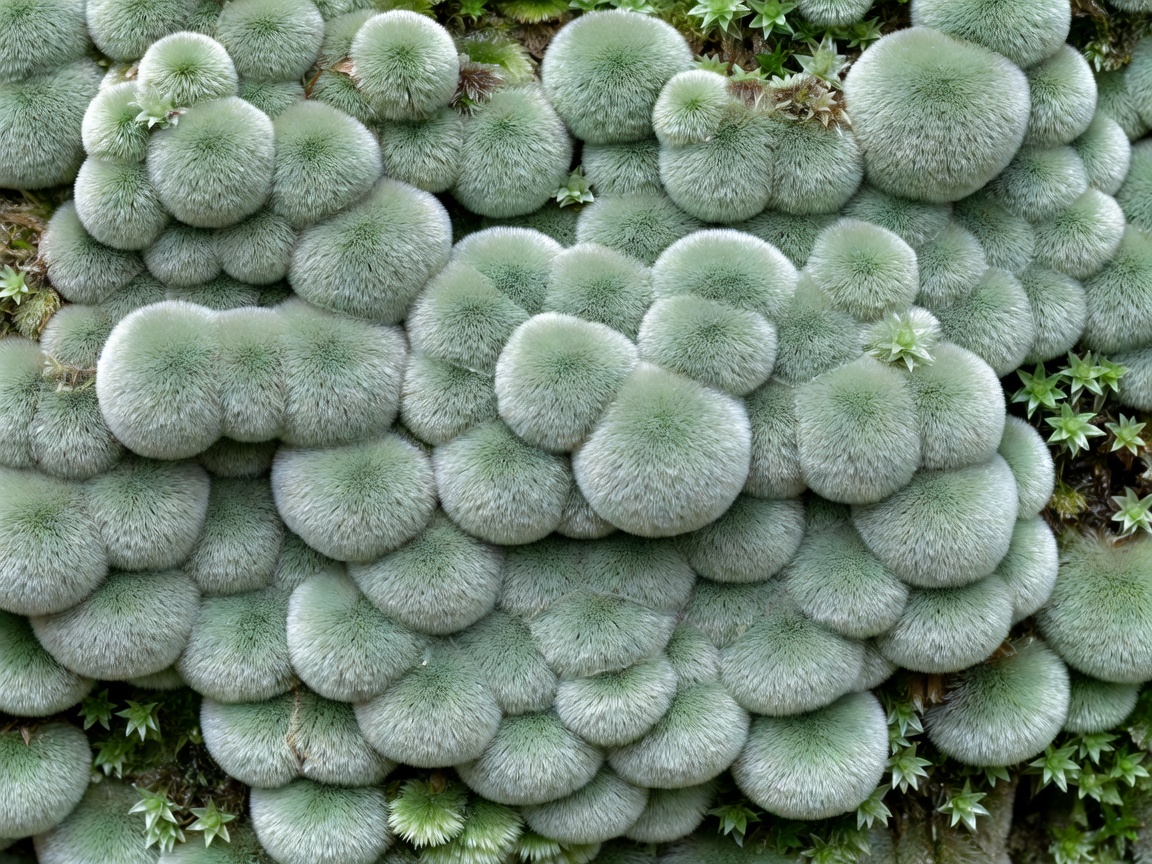
1. Botanical Classification & Morphology
Leucobryum glaucum belongs to the family Leucobryaceae. Often termed cushion moss, white moss, or pincushion moss, it forms dense, compact domes varying in color from silver-pale glaucous green when dry to deep emerald green when saturated. Its unique pale tint stems from its microscopic cellular architecture: small chlorophyll-bearing chlorocytes are flanked on both sides by large, empty dead cells known as hyalocytes. These hyaline cells act as miniature biological reservoirs, absorbing and holding up to ten times their dry weight in water.
2. Key Cultivation Metrics in MossPod
| Environmental Parameter | Ideal Range in Chamber | Risk Threshold |
|---|---|---|
| Illumination | 30 – 45 μmol/m²/s (4300K CRI 98) | Avoid direct sun (>80 μmol/m²/s) |
| Relative Humidity | 75% – 88% | Under 50% causes dormancy curling |
| Water Quality | Distilled / Reverse Osmosis (<15 ppm TDS) | Tap water causes mineral crust bloom |
| Temperature | 16°C – 23°C (60°F – 73°F) | Exceeding 29°C risks mold spore growth |
3. Longevity & Pruning Protocol
Because cushion moss grows at an extraordinarily measured pace (roughly 2mm to 4mm per year in domestic chambers), it never requires aggressive pruning. If a leaf tuft extends beyond the desired contour, simply snip the tips with precision stainless steel bonsai scissors. Every MossPod kit includes a live clump cultured under certified laboratory conditions, guaranteed 100% free of garden pests, soil mites, or invasive molds.
Ficus Pumila Minima (Micro Ivy)
Discover how micro creeping vines pair naturally with cushion moss cushions to form vertical biological climbing layers.
Explore Micro Ivy Profile →