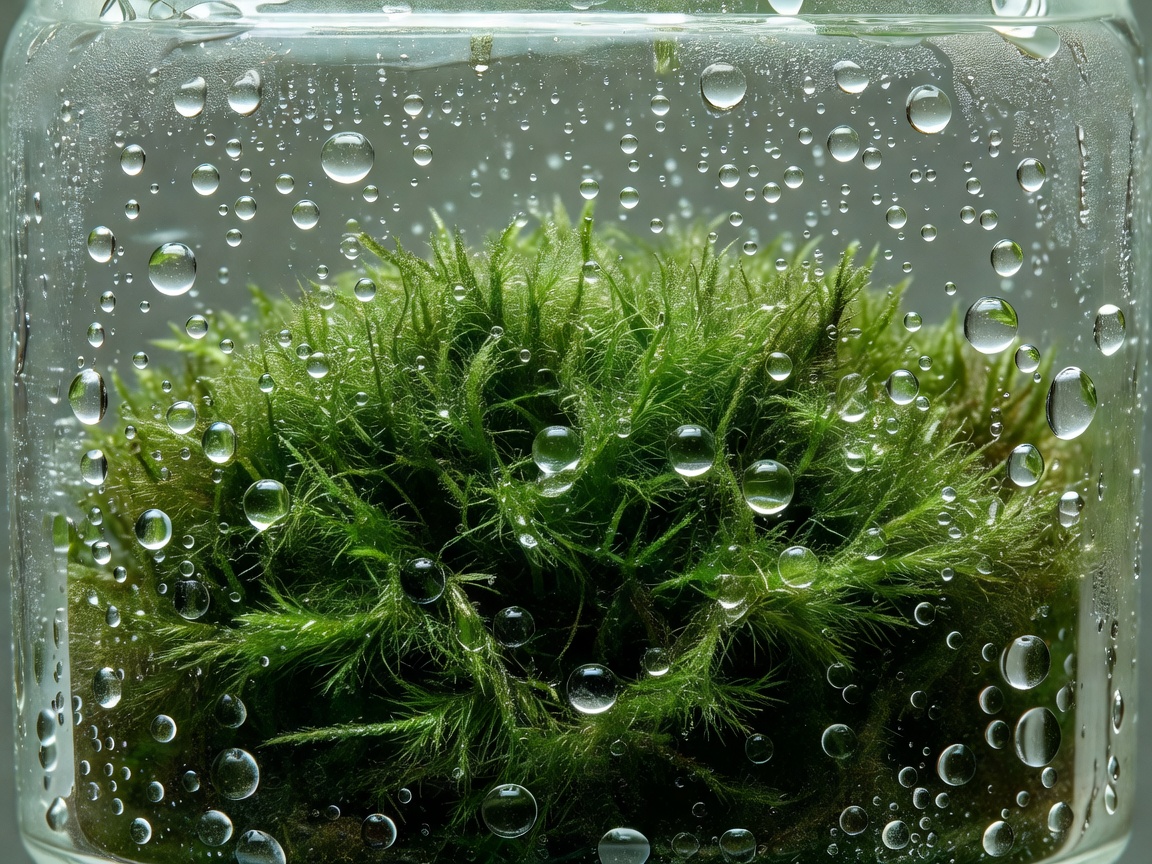
1. Distinctive Pinnate Anatomy
Unlike common velvet or carpet mosses, Fissidens nobilis produces erect stems lined with two neat rows of alternating leaflets, closely resembling prehistoric cycad fronds or miniature feathers. Reaching heights of 1.5cm to 3cm, it creates stunning vertical depth inside the MossPod dome, casting intricate shadows when illuminated by the top 4300K diode canopy.
2. Anchoring to Sintered Pumice
In traditional aquascaping, Fissidens is tied with cotton thread until rhizoids anchor. In MossPod, our sintered volcanic rock core features 60-micron micro-cavities. When placed against the wet stone surface, Phoenix Moss shoots fine rhizoid micro-filaments directly into the porous pumice within 12 to 14 days, forming a permanent biological weld that requires no glues or synthetic bindings.
3. Water Purity Requirements
Phoenix Moss is especially sensitive to dissolved mineral salts and chlorine. We advise using only pure distilled or steam-demineralized water in the reservoir. A single 180ml fill provides roughly two weeks of continuous capillary hydration without mineral buildup.
Leucobryum Glaucum (Cushion Moss)
Explore the contrasting velvety textures of Japanese pincushion moss and its remarkable drought-resilient hyaline cell structure.
Read Cushion Moss Guide →